
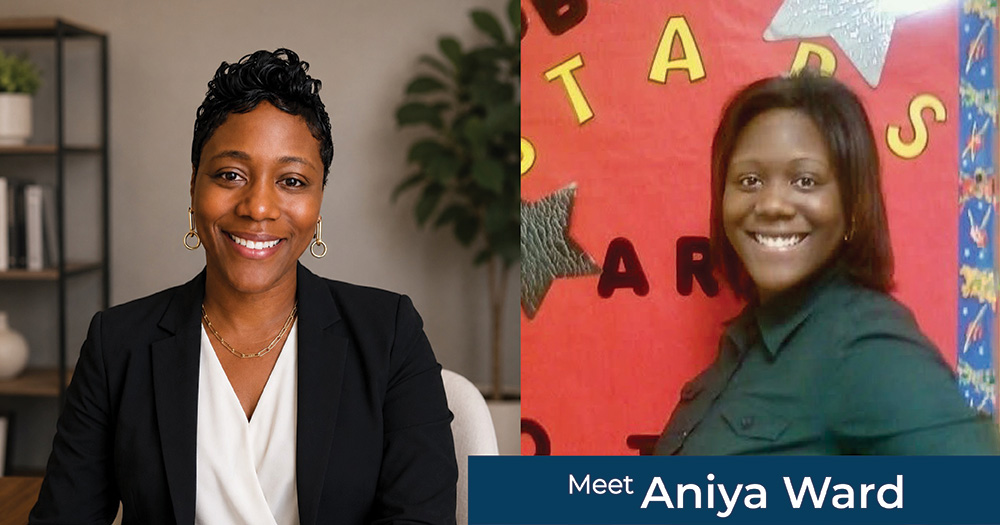
From the Family Business to a Career in ADA | 504 — Aniya Ward’s Path to Disability Access Work
Enjoy the next article in our series where we interview our team members to learn how they came to this work. For Aniya Ward, the path ran through a family business to a middle school classroom, a community college split role nobody expected, and a mentor whom she now works alongside at Grand River Solutions.
Aniya Ward’s path into ADA and Title IX work started, in a sense, before she ever chose it. She comes from a family of schoolteachers — her grandmother made it something close to a rule that every grandchild minor in education, whatever else they studied, so there would always be a job to fall back on. Ward’s father ran residential behavioral facilities, and she spent college summers working there, learning the field from the inside before she’d finished a degree.
She started her career as a middle school teacher in Kinston, North Carolina, holding a master’s in counseling and another in education. From the classroom, she moved into writing IEPs and running meetings for her school’s special education department, then became a learning specialist — all within her first three years out of college. A part-time adjunct position at Lenoir Community College led to a new role that hadn’t existed before: half ADA specialist, half Title IX investigator, split between two departments at once.
She held the combined role for seven years, working across K-12, early college, and community college populations simultaneously, before moving to Winston-Salem State University in 2017 as a Title IX and EEO investigator — her first fully dedicated higher ed role.
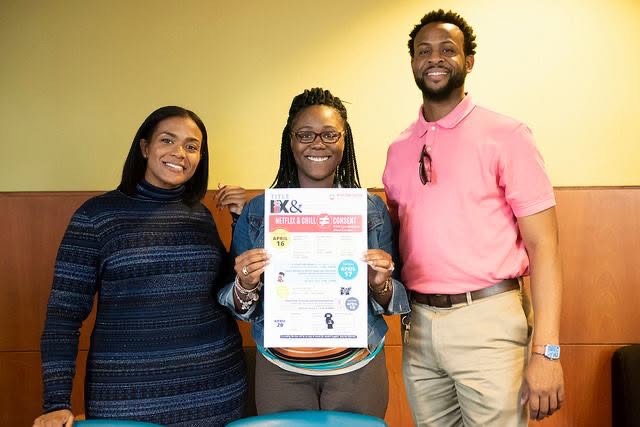
Aniya (middle) with her Winston-Salem colleagues, Aishah Casseus Esq. and Dr. Quentin Gunter.
A key figure throughout Aniya’s career has been Myra Waddell, an instructor and ADA Coordinator she met while she was in college. Aniya recalls that “Myra became a mentor; she was always very welcoming and supportive as well as being an excellent teacher.”
Years later, when Ward took the Title IX role at Winston-Salem State, she found herself sharing an office with Myra, who by then was running the university’s ADA program. That reconnection eventually led Ward into working at Grand River Solutions, where she and Myra now work alongside each other on the Coordinator and Director Services team.
Ward joined Grand River Solutions in 2022, a detail she remembers precisely: she was the company’s 50th employee, hired on the 50th anniversary of Title IX. She started on the Resolution Services side as an investigator before transitioning toward advising and, eventually, ADA & 504 work full-time.
Reflecting on how the field has shifted, Ward points to a broader cultural change in how people understand and advocate for their own needs. Where earlier generations often minimized their own struggles or waited for someone else to name what was wrong, she’s seen a marked shift toward self-awareness and self-advocacy, particularly since the pandemic.
“People over the years, they now view themselves as top priority… I don’t hear what I used to hear, things like, ‘I don’t want to inconvenience anyone,’” Ward said. “It’s a culture shift. And it teaches people like me, who’ve been in the field a long time, that you need to stay on your game.”
That shift, she notes, hasn’t reached everyone equally. Much of Ward’s current thinking, and the focus of her doctoral research at Clark Atlanta University, centers on disparities in how well K-12 students are prepared to advocate for accommodations once they reach higher education, particularly for students at historically Black colleges and universities. Students at better-resourced schools, she explains, often arrive with established documentation, therapists, and specialists already in place. Students from under-resourced schools frequently arrive with none of that infrastructure, having kept the same accommodation from years earlier simply because retesting risks losing services altogether.
“They don’t have anything to advocate with, and for,” Ward said. “So, it kind of doesn’t support them advocating for themselves.”
It’s the gap between students who arrive prepared and those who don’t know what to ask for that continues to drive Ward’s focus, both in her work with Grand River Solutions and in her academic research. For Ward, the work is ultimately about meeting people at whatever stage of self-understanding they’ve reached and helping institutions build the infrastructure to support them from there.
Visit the About Page and the Join Our Team page to learn more about our outstanding team.
